Italiano
La Fama XVIII SECOLO Storico giardino Garzoni
Come accade nel teatro, le statue della scena centrale, allusive al cosmo, al caos, ai terremoti, alle forze ctonie, si mostrano in sequenza: Nettuno che scuote le acque dal fondo della grotta, le figure femminili simboleggianti il torrente Pescia (lucchese con la pantera e fiorentino col Marzocco), il gigante Encelado provocatore dei terremoti, mentre la Fama, figlia di Gea e sorella del Gigante trionfa in sommità con la tromba che eroga zampilli.
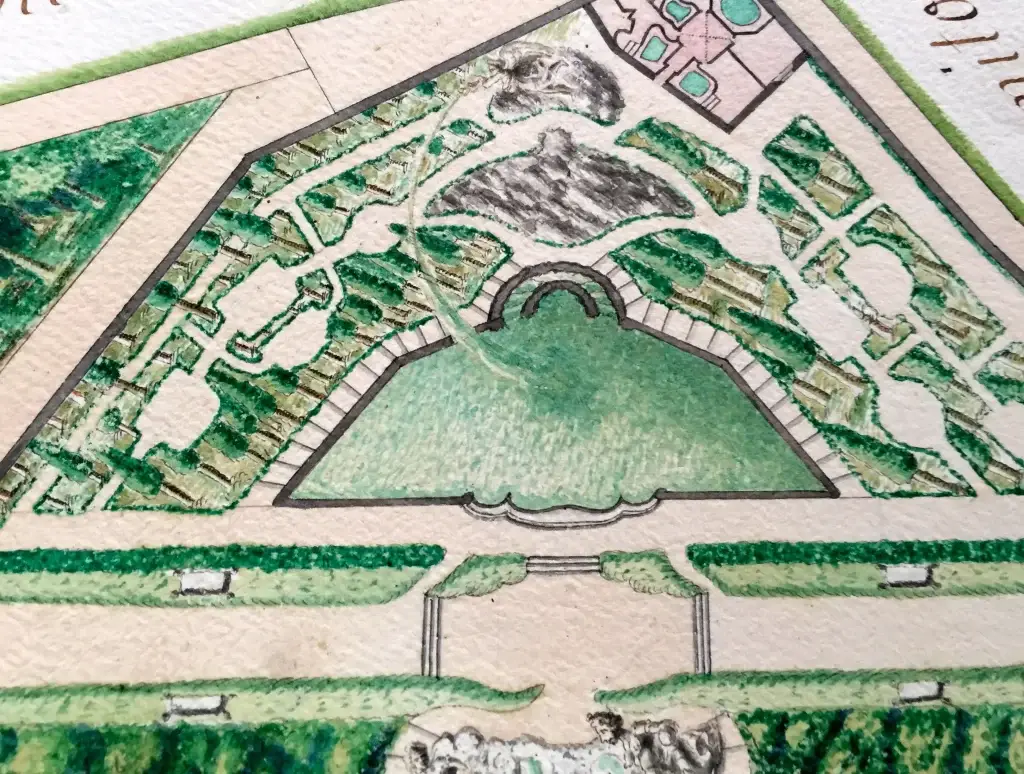
Realizzata dall’artista Giovanni Domenico Paladini (Lucca, 1721-1772), la grande statua, in conglomerato e stucco, è collocata di fronte al “bottaccio” per la raccolta delle acque, coi condotti (uno verso la Fama e uno diretto verso i bagnetti) e la sottostante vasca mistilinea di raccolta delle acque che alimentano le altre fontane. La struttura della vasca o “laghetto”, circondata da muri di materia rustica dai profili mistilinei con finiture musive, evidenzia lesioni e deformazioni come se fosse stata colpita da un grande sconvolgimento tellurico. La mostruosa Fama, personificazione della Diceria, è il simbolo del potere irrefrenabile della parola di propagarsi e alterare la realtà. Per Virgilio è generata dalla Terra (Gea), già madre del titano Ceo e del gigante Encelado, per ritorsione contro gli dèi che avevano sprofondato i due figli nelle sue viscere (Eneide, IV, 174-183).
English
Fame 18th CENTURY Historic Garzoni Garden
As it happens in the theater, the statues in the central scene, alluding to the cosmos, chaos, earthquakes, and chthonic forces, are shown in sequence: Neptune shaking the waters from the bottom of the cave, the female figures symbolizing the Pescia torrent (Lucchese with the panther and Florentine with the Marzocco), the giant Enceladus the instigator of earthquakes, while Fame, daughter of Gaea and sister of the Giant triumphs at the top with the trumpet that delivers gushes.
Made by the artist Giovanni Domenico Paladini (Lucca, 1721 – 1772), the large statue, in conglomerate and stucco, is placed in front of the “bottaccio” for the collection of water, with the conduits (one toward Fame and one directed toward the baths) and the underlying mixtilinear basin for the collection of water that feeds the other fountains. The structure of the basin or “pond,” surrounded by walls of rustic matter with mixtilinear profiles with mosaic finishes, shows lesions and deformations as if it had been struck by a great telluric upheaval. The monstrous Fame, personification of Diceria, is symbolic of the irrepressible power of speech to propagate and alter reality. For Virgil, she is spawned by the Earth (Gaea), formerly the mother of the titan Ceo and the giant Enceladus, in retaliation against the gods who had plunged the two sons into her bowels (Aeneid, IV, 174-183).