METÀ XVII SECOLO
Italiano
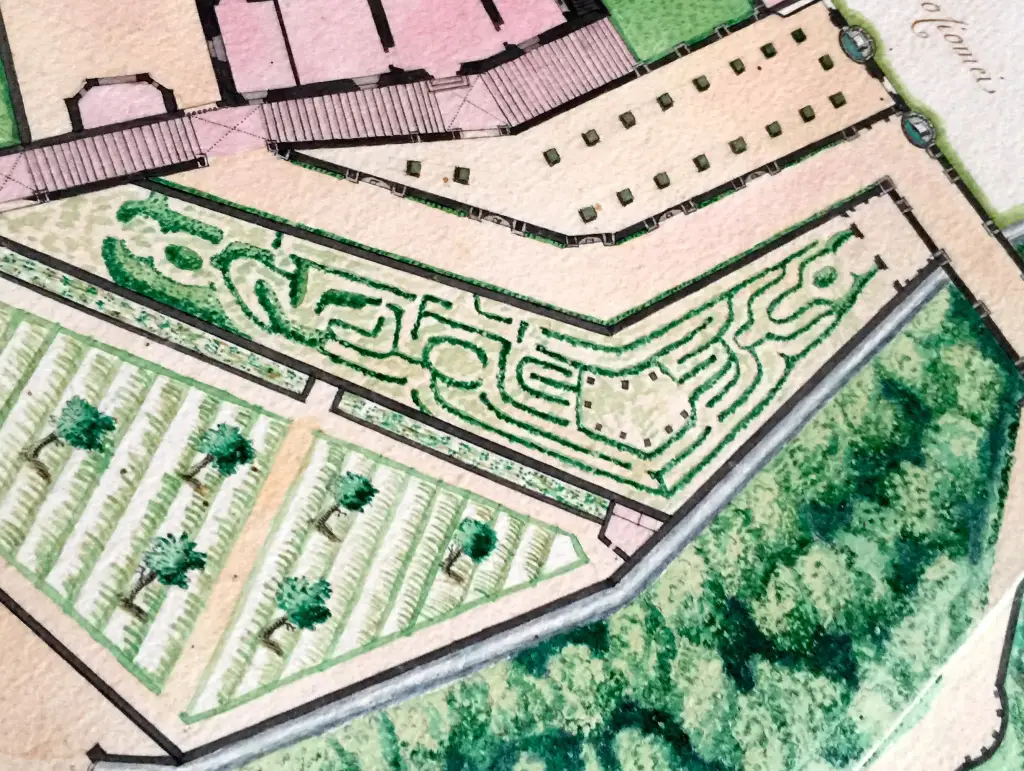
Le aree di raccordo tra la Villa e il Giardino, attestate fin dal terrilogio del 1680, comprendono il labirinto e l’orto con i vialetti di collegamento. Il labirinto, dall’irregolare forma allungata, presenta un disegno formato da siepi di bosso (Buxus sempervirens L.) che si dirada al centro, con sedili e tracce dei giochi d’acqua, visibile dalle bucature (due ovali e una ottagonale) della parete del ponte, che funge da schermo, dalla quale assistere al dipanarsi del percorso, dove perdersi e ritrovarsi come nel mitico labirinto di Cnosso.
In prossimità del ponte due nicchie con incrostazioni rustiche contengono le statue raffiguranti Sansone, l’eroe dalla forza prodigiosa, concessa direttamente da Dio, ed Ercole, inarcato con forza verso il mostro. Sono queste le figure allusive alle prove da compiere per intraprendere quel viaggio simboleggiato dal labirinto visibile dal ponte, per varcare l’impervio dislivello tra la Villa e il Giardino.
English
The connecting areas between the Villa and the Garden, attested since the 1680 terrilogy, include the labyrinth and the kitchen garden with connecting paths. The labyrinth, with its irregular elongated shape, has a design formed by hedges of buxus boxwood (Buxus sempervirens L.) that thins out in the center, with seats and traces of the water features, visible from the holes (two oval and one octagonal) in the wall of the bridge, which serves as a screen, from which to watch the unraveling of the path, where one can get lost and find oneself as in the mythical labyrinth of Knossos.
Near the bridge two niches with rustic encrustations contain statues depicting Samson, the hero of prodigious strength, granted directly by God, and Hercules, arched powerfully toward the monster. These are the figures alluding to the trials that must be undertaken to embark on that journey symbolized by the labyrinth visible from the bridge, to cross the impassable height difference between the Villa and the Garden.